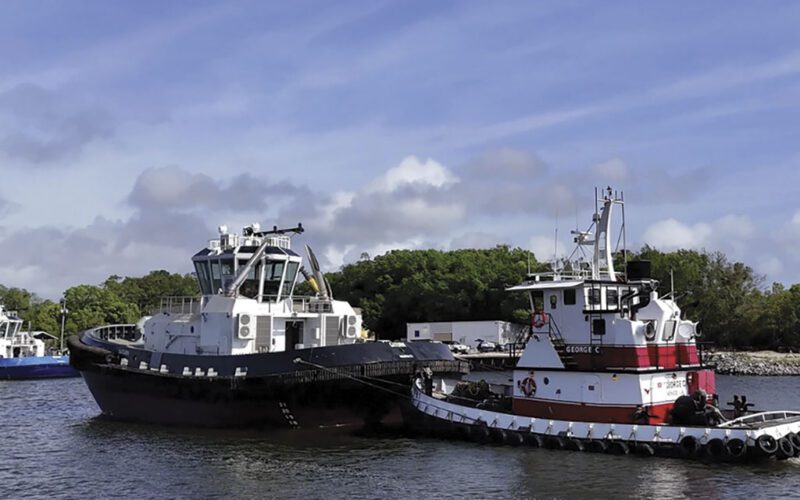
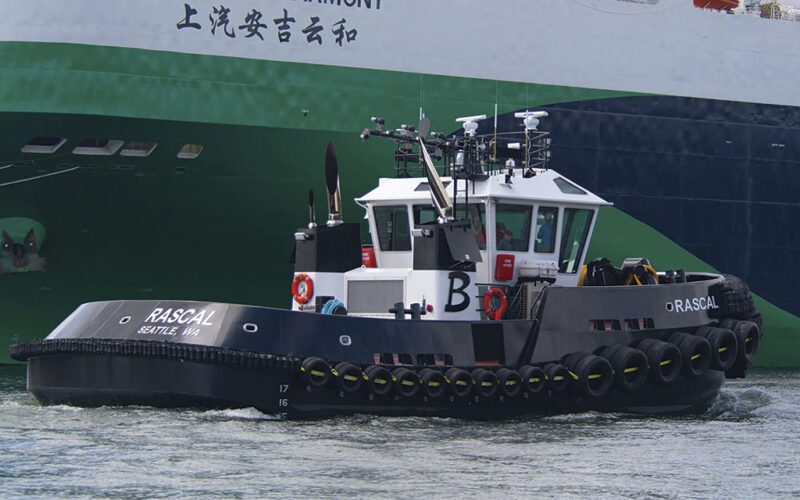
The tugs Rascal and Rowdy don’t seem like outliers on paper, but Robert Allan Ltd. designed the 65-by-32-by-11.5-foot, 2,900-hp vessels to do something ambitious: deliver nearly 40 tons of bollard pull from a “very compact” platform. The twin RAscal 2000-D tugs entered service in late 2024 at Brusco Tug & Barge with little fanfare, despite representing the highest bollard pull…
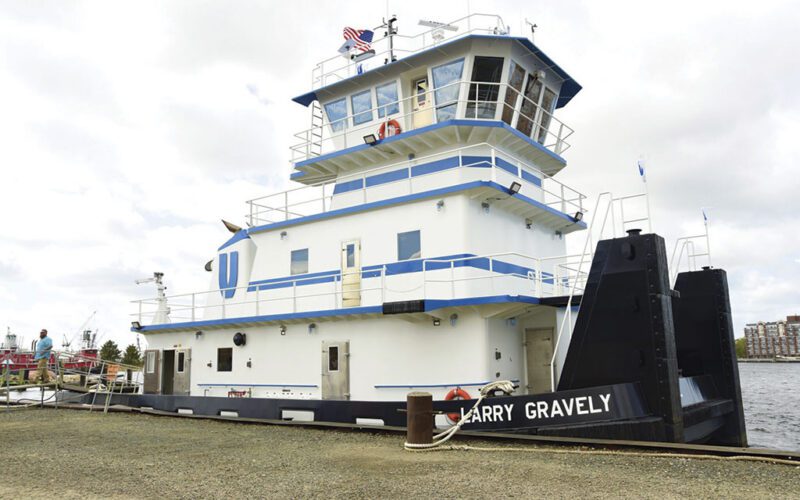
Larry Gravely is exactly what it was meant to be: a working towboat built for the steady demands of inland service. Built by Diversified Marine in Houma, La., the twin-screw vessel was delivered in April to Vulcan Materials for aggregate operations — moving construction materials, such as sand and gravel — with a design centered on durability, operating speed and…
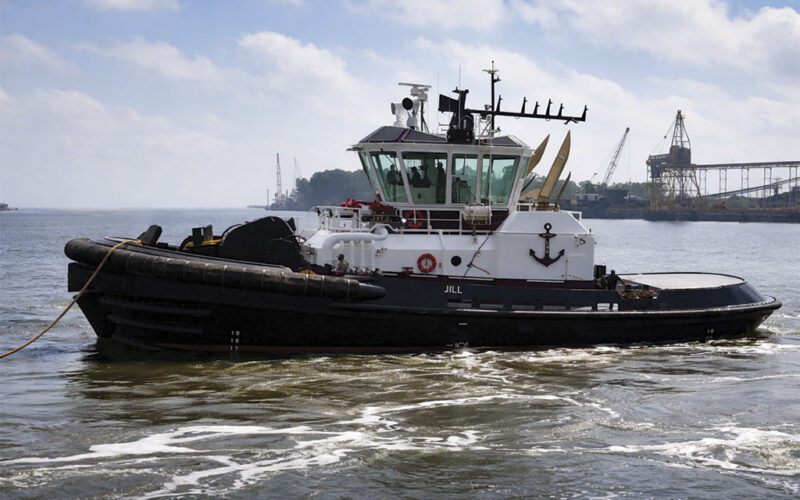
Jill is the final piece of a carefully built system. Delivered by Master Boat Builders in January, the 92-by-40-by-16.6-foot tug is the last Robert Allan Ltd.-designed RApport 2800 in a six-build series developed for Gulf LNG terminal operations. Jill is part of a standardized platform backed by a multicompany partnership and deployed across dedicated facilities along the U.S. Gulf Coast.…
Saturn marks a step up for Master Boat Builders. The Coden, Ala., shipyard entered the high-performance escort tug market with the April launch of Saturn, the first vessel in a new H500 series based on the RApport 3000 escort tug design. Built for Suderman & Young Towing Company, Saturn precedes three additional vessels — H501 through H503 — already under…
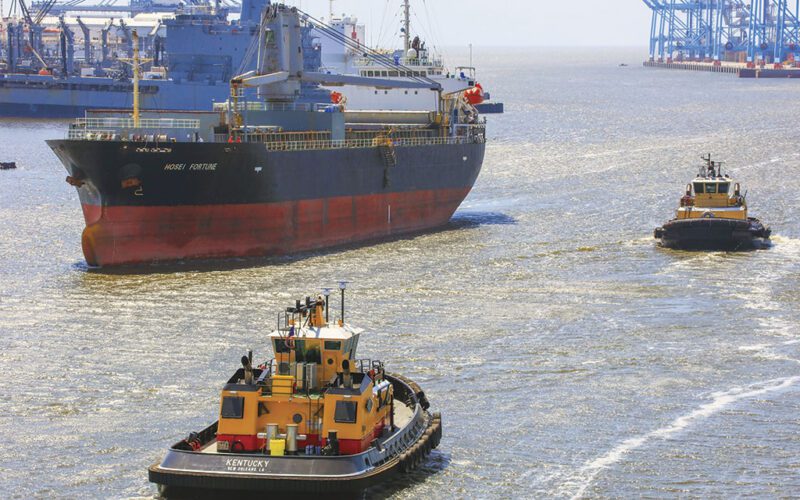
Kentucky is part of Crescent Towing’s growing class of low-emission, high-horsepower escort tugs on the Lower Mississippi River. Built by Blakeley BoatWorks in Mobile, Ala., the vessel follows sistership Angus R. Cooper II as the second in a pair of 6,000-hp z-drive escort tugs delivered through the companies’ continuing collaboration on Mississippi River ship-assist vessels. Designed by Crowley Engineering Services,…
Moran Towing is one of the largest tugboat operators in the United States, with more than 85 tugs in commercial service operating in 17 ports. That fleet will collectively be younger, more powerful and more comfortable for crews following a surge in new vessel orders. Over the last year, the company has taken delivery of four new 86-foot tugboats from…
The U.S. towing industry has seen some major technology transitions throughout its history, such as the move from coal-fired steam to diesel propulsion, the change from whistle signals to radio communications and the advent of azipods and cycloidal drives for increased maneuverability. Another of these transitions was the change from natural fiber rope to synthetic lines made of nylon and…
The quest for reduced- or zero-carbon propulsion has sparked extensive research and innovation within the maritime industry. One possible solution to the challenge of maritime emissions is the use of ammonia as a fuel source. Ammonia, which contains no carbon, can be used as a source of combustion for large-scale marine engines. It also can be used to generate electricity…
Big-name ship-assist operators have restarted fleet renewal programs. Regional towing companies are once again looking to build. Projects that have sat on the shelf are now going under contract. After three difficult years for shipyards and the tugboat operators considering whether to invest in their fleets, a sense of calm is returning to the harbor tugboat market. Although prices for…
Crowley’s electric tugboat signals cleaner future for U.S. towing fleet eWolf will begin assisting ships in San Diego this spring Crowley Capt. Joshua Ferguson eased eWolf off the dock in the Port of San Diego, spun the vessel 180 degrees and glided toward San Diego Bay. The first electric-powered tugboat in the United States remained eerily quiet as it accelerated…