

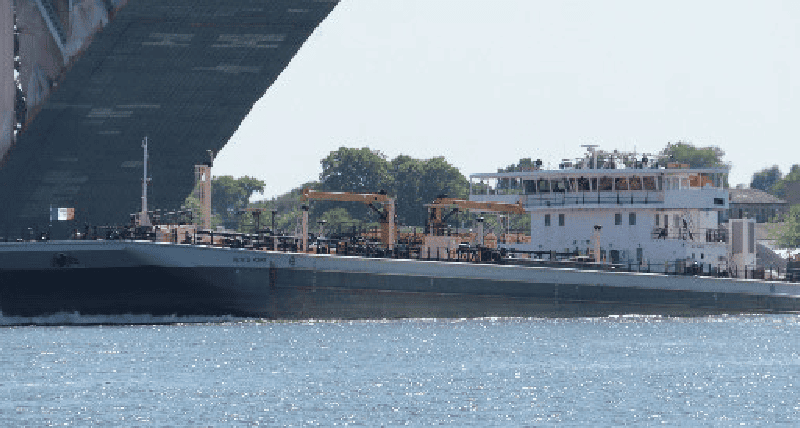
(WASHINGTON) — On May 24, 2025, about 1020 local time, the sludge vessel Hunts Point was moored at the North River Wastewater Treatment Plant on the Hudson River in New York City when an explosion occurred aboard the vessel. One crewmember was killed and three crewmembers sustained minor injuries. No pollution was reported. Vessel damage was estimated to exceed $10 million.
The National Transportation Safety Board (NTSB) determined that the probable cause of the explosion was unapproved hot work being conducted above a tank that contained a cargo that produced flammable methane gas, resulting in the gas igniting and the subsequent overpressurization of the cargo tank.
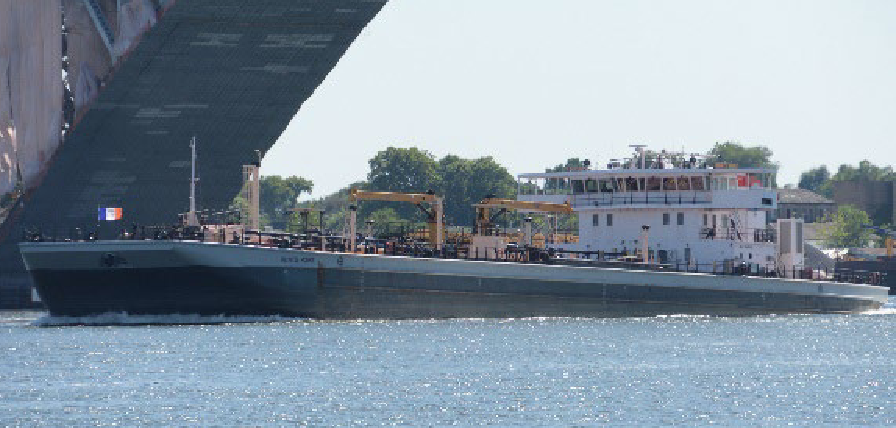
“Like other (city) sludge vessels, the Hunts Point was designed to transport treated sludge from wastewater facilities to the dewatering facility. On the day of the casualty, about 40,000 cubic feet of sludge remained aboard the vessel from the previous day’s operation. The remaining cargo was evenly distributed within the six cargo tanks,” the NTSB said in its report. “While the sludge had been treated, it still contained decomposing organic material and produced flammable gases. Any flammable gas the sludge produced would collect within the cargo tanks. As a result, the concentration of these flammable gases would increase the longer the sludge remained within the tanks.”
“Because the remaining sludge had become too viscous to pump from the cargo tanks, the crew had to perform a process called innage reduction – loosening the sludge by adding water to the tanks. To perform the process, the chief engineer had to remove the pipe plug from the modified cleaning hatch cover on each of the cargo tanks. However, since it had been about five years since the innage reduction process had been completed on the Hunts Point, all of the pipe plugs (connected to the flange) were rusted and seized, preventing their removal. Instead, the chief engineer removed the flange from each hatch so the pipe plugs could be removed in the machinery shop within the engine room. Once the flanges were removed from the cleaning hatch covers, there was nothing to prevent an ignition source, such as a flame or a spark, from coming into contact with the flammable gas exiting the cargo tanks,” the agency said.
Click here to read the complete report.
– National Transportation Safety Board
