

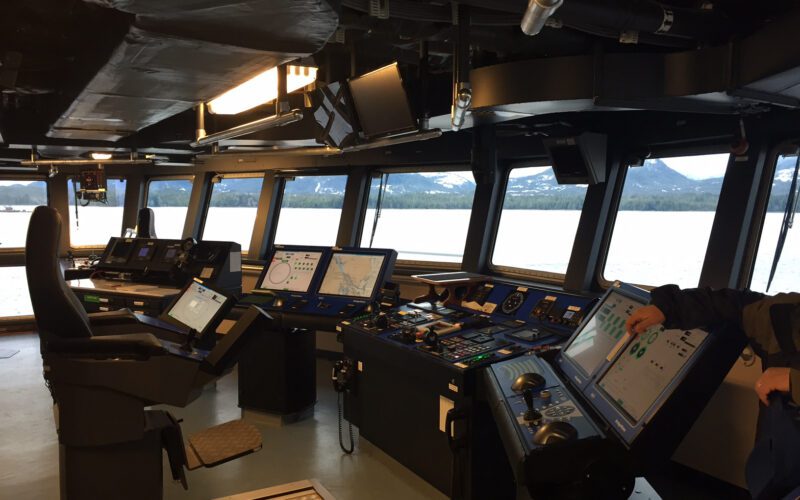
A new study has found a widening gap between seafarers’ formal qualifications and their ability to handle the increasingly complex demands of modern vessel operations, as digital technology transforms the maritime workplace.
The research, conducted by maritime innovation consultancy Thetius on behalf of Lloyd’s Register-owned maritime software provider OneOcean, found that just 18 percent of maritime professionals surveyed believe current training adequately prepares crews for real-world operations. More than half (52 percent) said qualified crewmembers struggle in actual operating conditions often or very often.
The findings, highlighted by OneOcean in October, were detailed in two reports published earlier this year, Decision-optimised or Overloaded? and Competent or Compliant?, based on surveys and interviews with masters, officers, engineers, training personnel and shore-based maritime professionals.
Competent or Compliant? found that 41 percent of respondents considered existing training poorly or very poorly aligned with operational realities, while another 41 percent rated it as neither well nor poorly aligned. More than half (56 percent) identified compliance-focused, or “tick-box,” training as a contributing factor to competency gaps.
Those gaps were most apparent during abnormal or unexpected situations, identified by 67 percent of respondents, followed by high-pressure operations (56 percent), transitions between different vessels (36 percent) and the use of complex digital systems, including electronic chart displays and reporting tools (31 percent).
Alexander McDonald, a coastal tanker master interviewed for the report, compared maritime certification to obtaining a driver’s license.
“You learn to pass your test, and then you learn how to actually drive afterwards,” he said.
Modern mariners must manage navigation and engineering systems while interpreting operational data, meeting reporting requirements and responding to alarms and unexpected conditions.
Decision-optimised or Overloaded? examined how digital technology, despite improving efficiency and access to information, can introduce new operational risks. Crews are increasingly required to reconcile information from systems that do not communicate effectively, while excessive alerts can contribute to fatigue and information overload.
The report found that 75 percent of mariners surveyed reported a moderate to significant increase in workload following Global Navigation Satellite System (GNSS) interference.
The researchers concluded that improving competency will require more than additional classroom instruction or certification. They recommended greater emphasis on vessel-specific familiarization, practical assessments, mentoring and training that reflects the conditions crews actually encounter at sea.
