The two-masted schooner Trinidad was built in 1867 at Grand Island, New York, to sail in the lucrative Great Lakes trade. It hauled Midwest “prairie gold” wheat from Milwaukee and Chicago to the eastern Great Lakes cities of Buffalo and Oswego, both in New York, and returned laden with coal. Specially designed to pass through the Welland Canal, which…
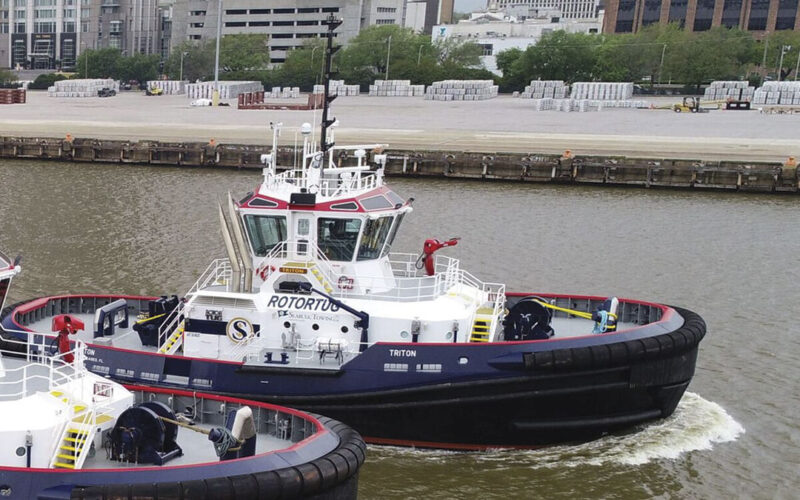
The National Transportation Safety Board (NTSB) cited speed as a leading cause of an August 2022 tugboat grounding near Ingleside, Texas, that sheared off the vessel’s starboard z-drive unit. The 4,500-hp CC Portland grounded outside the Corpus Christi Ship Channel at about 4:25 p.m. on August 7. The incident occurred while the crew tried to get a tow line aboard…
The midnight watch was uneventful as the tugboat Karen Koby sailed through the Gulf of Mexico with a crane barge in tow. That is, until the tug’s speed suddenly dropped at about 3:30 a.m. on June 15, 2022. The mate at the helm checked the engines and the weather but saw nothing amiss. He trained the spotlight on the crane…
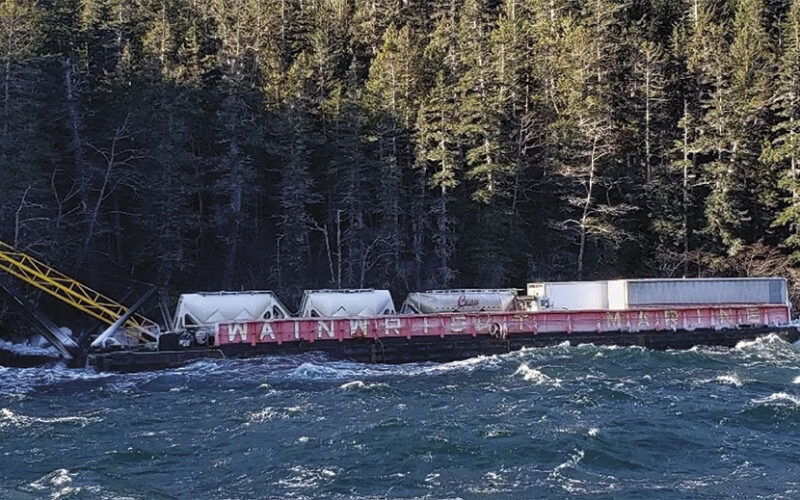
On Feb. 10, 2021, the tugboat Ingenika was rounding Europa Point, outbound from Kitimat, B.C., when it steered straight into a 40-knot wind. Battered with frozen spray, the tug struggled in increasingly heavy seas as it towed the Miller 204, a 200-foot barge loaded with construction equipment, dry cement, and other materials for a large hydroelectric power plant in…
The race to reach a decarbonized, “net zero” maritime industry by 2050 is, in some ways, similar to the advent of containerships some 70-plus years ago. In the 1960s and 1970s, freight carriers, terminal operators, shoreside labor, engineers, and other interested parties tried out different container sizes, construction materials, and configurations before the familiar 40-foot and 20-foot steel container became…
No matter the flag, language, or sea conditions, the work of a professional mariner is universal and somewhat standardized in terms of experience from the deck to the bridge to the engine room. But aboard the National Oceanic and Atmospheric Administration’s research vessels, a mariner can be assured of participating in a variety of missions, all carried out in the…
Ports on the West Coast are working toward a zero-emissions future thanks to advances in electrification, but cost remains an issue with state and federal funds helping to support their efforts. Decades ago, forward thinking positioned the Port of Oakland in California as the first major deep-water port on the U.S. Pacific Coast to build terminals for container ships. Today,…
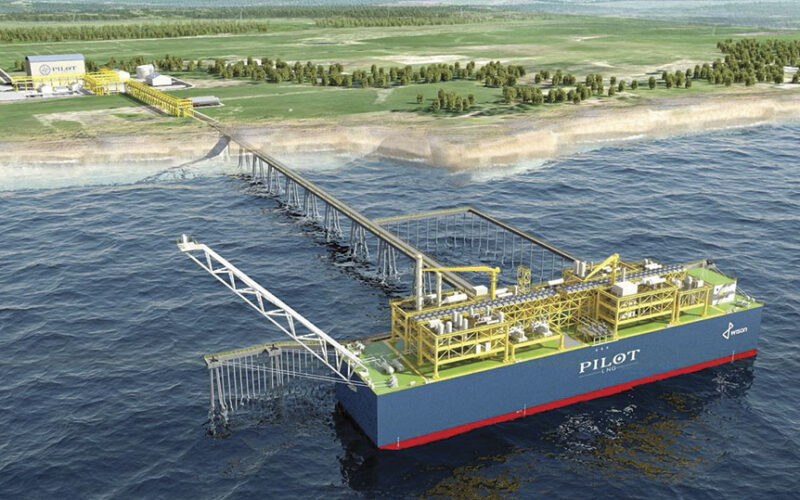
Houston, Tx.-headquartered energy company Pilot LNG and Seapath, a maritime subsidiary of the Libra Group, have formed a joint venture partnership to develop, construct, and operate the first dedicated liquefied natural gas bunkering facility (LNG) on the U.S. Gulf Coast. Slated for construction in the Galveston Bay area, the $150 million facility will provide fuel for LNG-powered vessels and is…
SEACOR Holdings Inc. has sold its inland towing and barge division to Nashville-based Ingram in an attempt to realign its portfolio. The sale includes the transfer to Ingram of eight towboats, 1,000 dry cargo hopper barges, and a network of terminal and fleeting infrastructure along the Mississippi River. The deal will boost Ingram’s fleet to 150 towboats and 4,000 barges…
For hundreds of years a seaman’s sea chest, was part of life for merchant mariners. Often made of intricately carved or painted wood, it was stored in the crew’s quarters and held the individual’s personal property. Besides containing bedding, clothing, and items of entertainment such as books, playing cards, or musical instruments, sea chests were also filled with keepsakes from…