
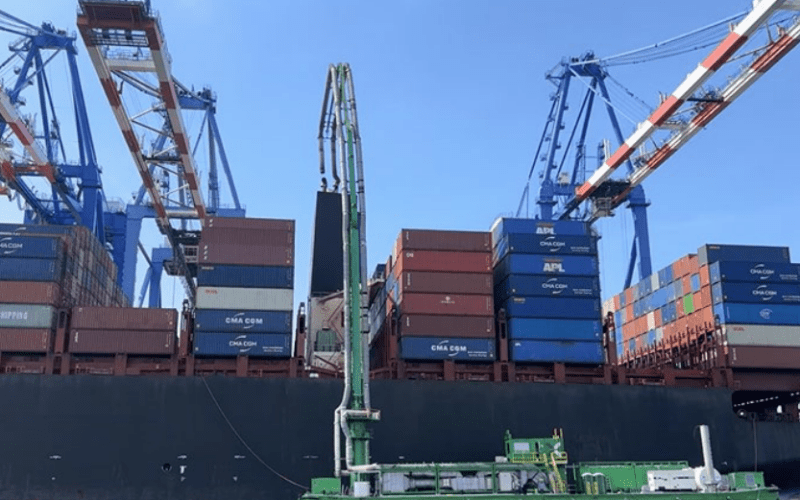
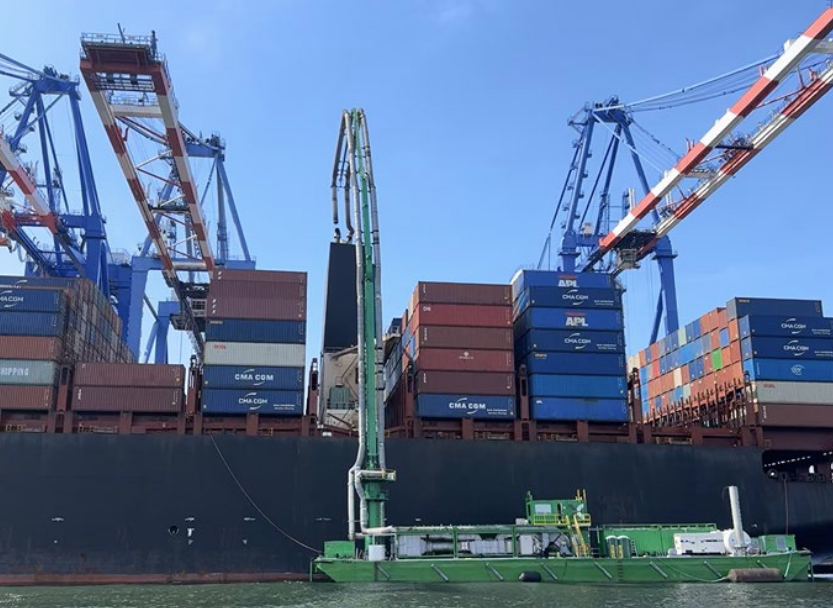
(WASHINGTON) — On June 2, 2024, about 1649 local time, the emissions control barge STAX 1 was capturing emissions from the containership Erving at the Fenix Marine Services Container Terminal in the Port of Los Angeles. A ship-to-shore container crane struck the barge’s capture-and-control articulated arm, causing it to collapse. Sections of it fell onto the barge, onto Erving, and into the water.
The arm’s hydraulic system released about 10 gallons of hydraulic oil onto the deck of Erving and into the water. One person on board STAX 1 sustained minor injuries. Damage was estimated at $3.2 million.
The National Transportation Safety Board (NTSB) determined that the probable cause of the incident was a shoreside crane operator moving the container crane without verifying its lowered boom had ample clearance over any obstructions, and the container terminal’s inadequate guidance for gantrying cranes.
Lessons learned
During shoreside container crane operations, nearby structures, such as ground obstructions, vessel exhaust stacks or superstructures, or vessel emission capture systems, can potentially block crane movement. To mitigate the risk of a casualty occurring, it is critical that crane operators be aware of such structures and maintain line of sight of obstructions visible from a crane cab.
Additionally, the use of a dock signal person can help to identify ground obstructions during crane movement. Including such obstructions in safety briefings or outlines of planned crane movements can improve awareness among crane operations personnel.
Establishing and enforcing procedures regarding maintaining line of sight and using a dock signal person during crane operations can further mitigate the risk of a crane striking a nearby object or structure.
Click here to read the complete casualty report.
– National Transportation Safety Board
