

(LONDON) — Governments at the International Maritime Organization (IMO) on Friday decided to postpone for one year the adoption of the world’s first global carbon pricing system for shipping, Safety4Sea reported.
The IMO agreed to delay the planned adoption of the Net-Zero Framework (NZF) for one year in a vote during the last day of a session of the Marine Environment Protection Committee (MEPC). The motion to delay was put forward by Singapore and called to a vote by Saudi Arabia.
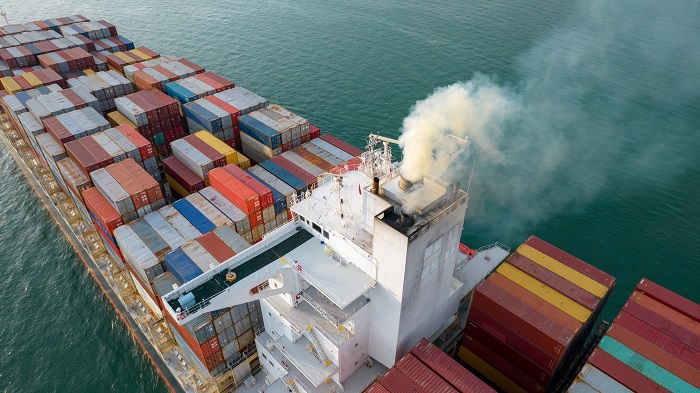
The IMO Net-Zero Framework sets binding targets for ships over 5,000 gross tons to cut the carbon intensity of their fuels, starting in 2028, and introduces an economic system of credits and penalties. Ships that exceed emission limits must buy “remedial units,” while low-emission ships can earn and trade surplus credits. Revenues go into an IMO Net-Zero Fund to support clean-fuel adoption and help developing countries transition.
A clear majority of countries at an MEPC meeting in April supported the adoption of the framework. Sixty-three countries voted yes (including the European Union 27, Brazil, China, India, Canada, United Kingdom, Korea and Japan) versus a minority opposition from 16 states.
In the lead up to the most recent meeting, the Trump administration threatened retaliatory tariffs and sanctions, especially on developing nations and the most climate-vulnerable states, if they supported the framework. Delegates from many developing countries described this pressure on their capitals as “bullying,” “unprecedented” and “undiplomatic.”
The United States and Saudi Arabia also tried to create a delay by proposing to change the IMO’s regular adoption process by consensus to an “explicit” adoption process which would impose additional hurdles to enforce the framework, especially for many developing countries.
Some delegates reportedly believe that putting the talks on hold will give countries more time to find consensus on this flagship climate law. Others fear that the U.S. will further ramp up pressure on developing countries to oppose adoption at a later stage.
On Friday, 57 countries voted in favor of delaying the NZF, with 49 countries against. There were 21 abstentions.
The original entry into force of the NZF was planned for March 2027. This timeline will now have to be reviewed.
“We are disappointed that member states have not been able to agree a way forward at this meeting,” said said Thomas Kazakos, secretary-general of the International Chamber of Shipping. “Industry needs clarity to be able to make the investments needed to decarbonize the maritime sector, in line with the goals set out in the IMO GHG (greenhouse gas) strategy. As an industry we will continue to work with the IMO, which is the best organization to deliver the global regulations needed for a global industry.”
