Mississippi River closed after bridge strike breaks 30 barges loose

Thirty barges being pushed south on the Mississippi River broke free after the lead barge struck a concrete bridge support near Vicksburg, Miss. Capt. Buck Lay was guiding barges loaded with petroleum coke and grain downstream April 21 when the lead barge rammed a support pillar on the old U.S. Highway 80 bridge, which has railroad tracks but is not…
Read More
When your license is at stake, hiring a consultant can make a difference

When your license is at stake, hiring a consultant can make a difference

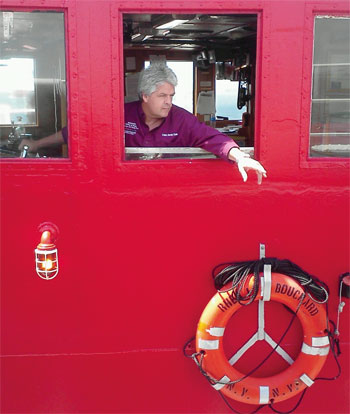
Randy Cole, a captain on articulated tug barges, renewed his 200 ton master near coastal and 200 ton master of towing licenses in 2011. He did not do it alone. Cole, an employee of Bouchard Transportation Co., works one month on, one month off. While at sea, he could not send follow-up information to the Coast Guard’s National Maritime Center…
Read More

Shorter training programs at public colleges are viable alternative

Before entering the industry, I looked at different ways to begin my career. Back then working my way up from the bottom, “coming up the hawsepipe,” or attending a four-year academy were essentially the only two choices available to me. I decided on the academy route after visiting a couple of those four-year public institutions, SUNY Maritime College and California…
Read More
Shell, Conoco postpone plans for offshore drilling in Arctic Alaska

Shell, Conoco postpone plans for offshore drilling in Arctic Alaska

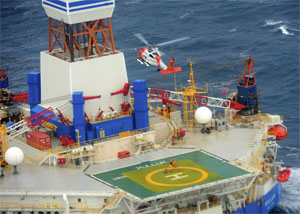
Problems with two of its drilling vessels have led Royal Dutch Shell to delay offshore oil exploration in Alaska’s Arctic for 2013, while regulatory uncertainty has prompted rival ConocoPhillips to postpone its plans to drill there through 2014. In February, Shell announced a “pause” in exploratory drilling in the Chukchi and Beaufort seas to “ensure the readiness” of equipment and…
Read More
Turning waste heat into electricity saves fuel, reduces CO2 emissions

Turning waste heat into electricity saves fuel, reduces CO2 emissions

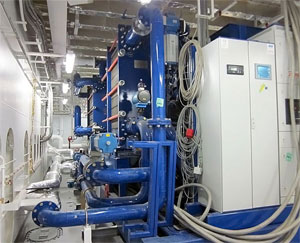
There are currently around 16,000 registered vessels sailing worldwide. This huge commercial shipping fleet accounts for between 4 to 5 percent of the world’s carbon emissions suspected of causing climate change, according to Sweden’s Opcon Energy Systems AB. One promising method for cutting carbon dioxide emissions — as well as nitrous oxides, sulfur dioxide and particulate matter — is to…
Read More

MarAd: U.S.-flag laker fleet on the road to recovery from recession, still faces obstacles

Despite low water and lack of dredging, the Great Lakes shipping industry is on the mend from record low traffic in 2009. The Maritime Administration’s report, “Status of the U.S.-Flag Great Lakes Water Transportation Industry,” outlines some of the success and challenges of the U.S.-flag fleet that plies the lakes. Cargo on the lake dropped 33 percent in the economic…
Read More
Engineers resurrect use of water-lubricated propeller shaft bearings on commercial ships

Engineers resurrect use of water-lubricated propeller shaft bearings on commercial ships

As environmental regulations tighten, water-lubricated propeller shaft bearings are becoming a popular alternative to oil-lubricated bearings for commercial vessels. Regulations imposed by the U.S. Environmental Protection Agency (EPA) are placing greater burdens upon shipowners to prevent environmental pollution in the event of oil leakage. Oil found in deck equipment such as cranes, windlasses, bearings and other equipment has become a…
Read More

Plimsolls go to Coast Guard casualty office, longtime mariner trainer, safety advocate

The editors of Professional Mariner have presented this year’s Plimsoll Awards for Outstanding Service to the U.S. Coast Guard office whose mission is to help vessel operators avoid casualties, to a mariner trainer who pioneered the concept of bridge resource management and to an industry executive who has advocated measures to end sinkings resulting from cargo liquefaction. Brian Gauvin Attending…
Read More