

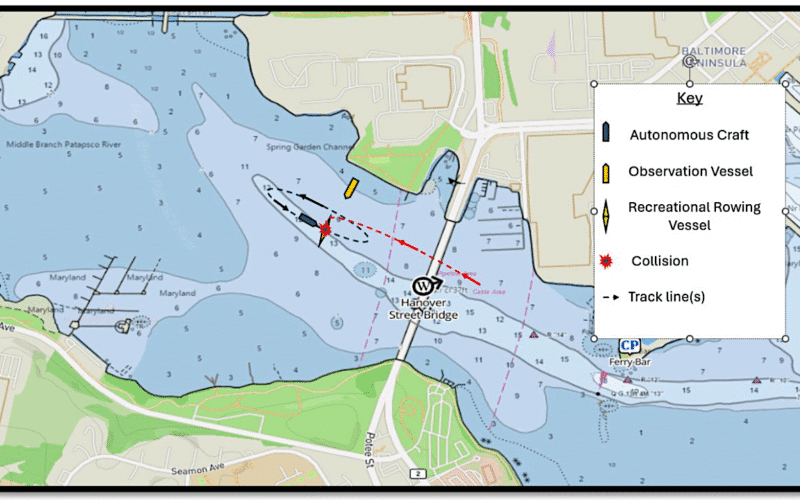
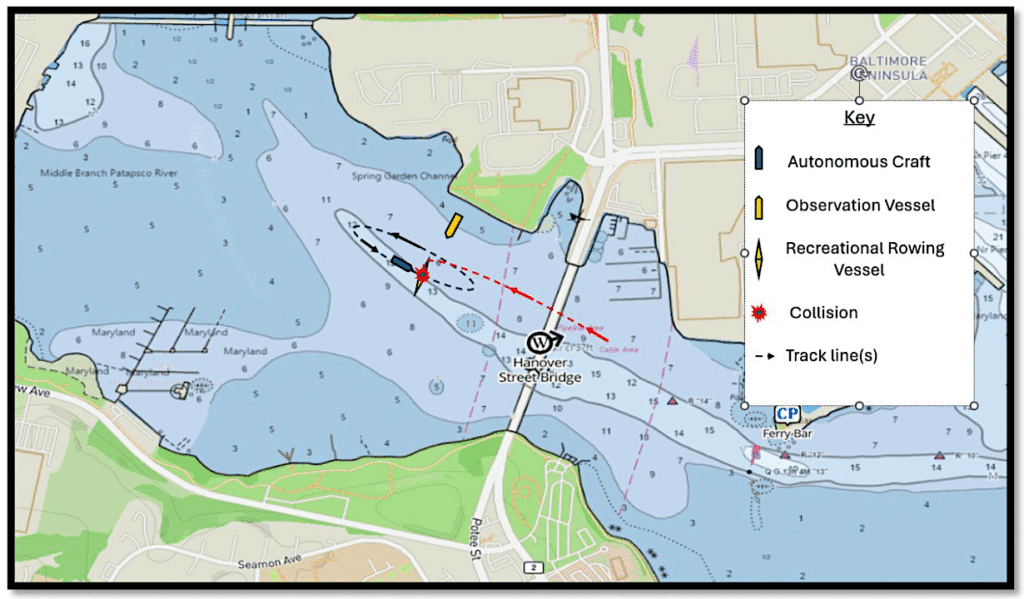
(WASHINGTON) — On Aug. 7, 2024, a 16-foot autonomous vessel collided with a 27-foot recreational rowing vessel from a local rowing club on the Patapsco River in Baltimore, Md. At the time of the incident, the autonomous vessel was undergoing testing which required its anti-collision system to be disabled and was being observed by a reduced crew aboard a separately manned vessel positioned just north of the collision site. Moments before the collision, the operator of the rowing scull jumped into the river to avoid impact. The collision resulted in a total loss of the recreational vessel.
The U.S. Coast Guard investigation into the collision identified five key factors that contributed to the incident. These included the test observation crew’s failure to remain attentive, their noncompliance with planned crew requirements, their failure to follow the proposed testing location and procedures, and the disabling of the autonomous vessel’s collision avoidance system during testing.
Coast Guard investigators have identified the following measures to mitigate the risks associated with the contributing factors identified above:
• Owners and operators of autonomous vessels should review training protocols for operators and consider establishing minimum manning requirements for observers of autonomous testing and operations. Appropriate manning, adequate training, and adherence to operational procedures are critical to ensuring safe operations, especially when conducting testing that requires a reduction in equipped safety features.
• For the safe operation of autonomous vessels, it is vital that companies engage with their local captain of the port (COTP) at the earliest possible stage. These early, continuous, and transparent communications are fundamental to developing a comprehensive risk evaluation for novel operations. To ensure maximum effectiveness, companies should:
– Engage early and continuously: Establish a transparent and ongoing dialogue with the local COTP from the project’s inception.
– Provide detailed plans: Submit a written overview covering vessel capabilities, the planned operational area, a testing schedule, and all risk mitigation strategies.
– Report changes and mitigations: Immediately report any deviation from the operational plan and clearly explain how risks will be managed, especially when collision avoidance or other safety features are deactivated.
– Conduct pre- and post-testing communications: Initiate and conclude all testing with a notification to the nearest Coast Guard COTP representative.
The Coast Guard issues findings of concern to disseminate information related to unsafe conditions that were identified as causal factors in a casualty and could contribute to future incidents. Findings of concern are intended to educate the public, state or local agencies about the conditions discovered so they may address the findings with appropriate voluntary action or highlight existing applicable company policies or state/local regulations.
These findings of concern are provided for informational purposes only and do not relieve any domestic or international safety, operational or material requirements. For any questions or comments, contact the Sector Maryland-National Capital Region Investigations Division by email at [email protected].
– U.S. Coast Guard
