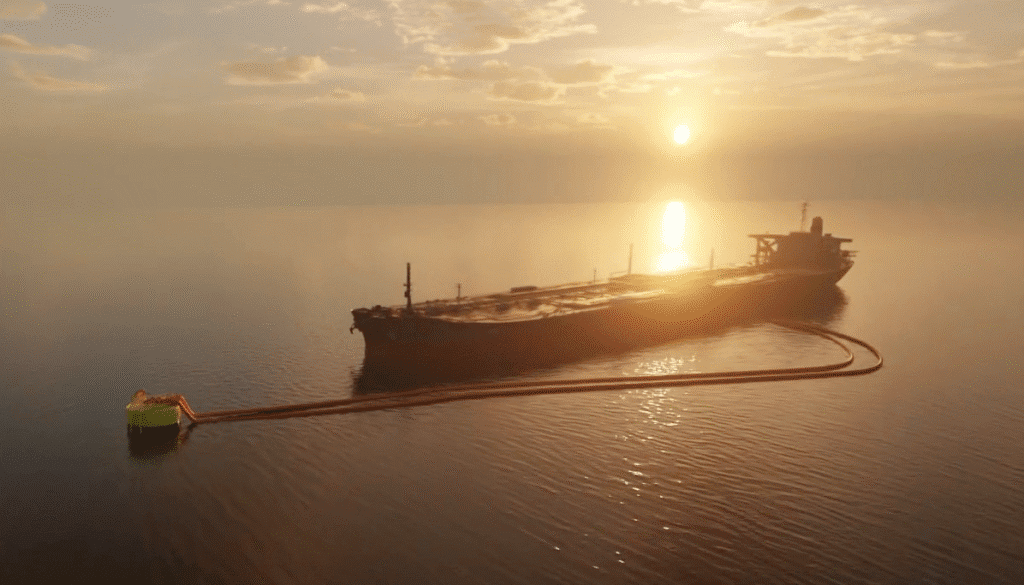


(WASHINGTON) — Texas GulfLink has received a license to own, construct and operate a deepwater port for the export of crude oil from the United States. The license is the first to be authorized under President Trump’s Unleashing American Energy Executive Order.
The deepwater port will:
• Support creation of up to 720 jobs for construction and operation.
• Export up to 1 million barrels of crude oil per day to fortify the energy security of America’s allies.
• Enhance the United States’ ability to accommodate very large crude carriers (VLCCs).
• Streamline export capabilities and reduce vessel congestion in nearshore waters.

“To restore our maritime dominance, we must have the modern infrastructure capable of handling the demands of global trade,” said Maritime Administrator Capt. Stephen Carmel. “Texas GulfLink provides a critical offshore logistical asset that keeps our nearshore waterways safer and allows American energy to reach the global market with unprecedented speed and efficiency. We are signaling to the global market that America is open for business. By approving projects like Texas GulfLink, we ensure that American oil producers aren’t halted by domestic bottlenecks.”
The Texas GulfLink deepwater port will be located 26.6 nautical miles off the coast of Brazoria County, Texas.
The U.S. Maritime Administration (MarAd) coordinated with the U.S. Coast Guard, numerous federal agencies and the state of Texas during the comprehensive review of the Texas GulfLink application. The review ensured that the project meets strict safety and security standards while advancing the nation’s economic interests.
The project is a key component of the administration’s broader strategy to restore U.S. maritime dominance. The deepwater port is designed to accommodate VLCCs, significantly reducing vessel congestion in nearshore waters, improving navigational safety, and enhancing the logistical efficiency of U.S. crude oil exports. Loading these massive vessels offshore is faster, cheaper and more efficient than transferring cargo in nearshore waters.
– U.S. Department of Transportation