

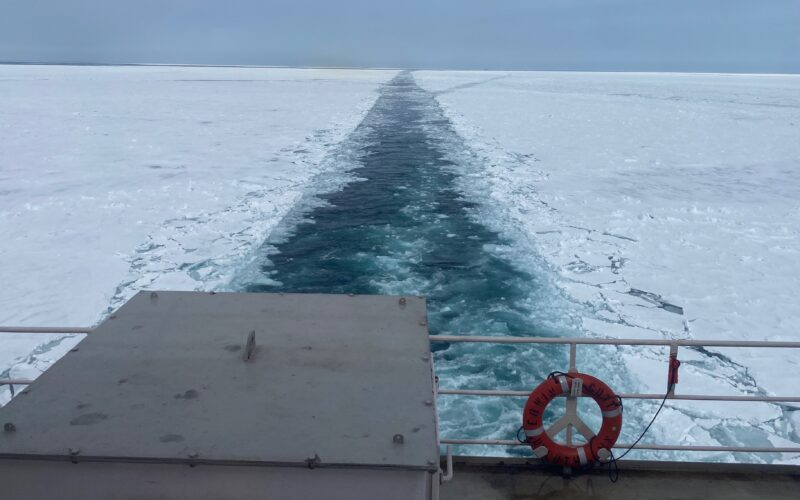
(CLEVELAND) — The numbers are in and U.S.-flag shipping on the Great Lakes lost 1,953 hours or 82 ship days due to inadequate icebreaking during the past winter. To put 82 days in perspective, it is about a third of the shipping season on the Great Lakes as the Soo Locks close on Jan. 15.
It took 96 hours after the Soo Locks opened for the year for the first vessel loaded with iron ore to finally clear the St. Marys River, the critical connection point between Lake Superior and the lower Great Lakes. At one point 19 vessels were stopped for multiple days in the ice, waiting for icebreakers to clear the way to either get their loads or deliver them.
The ice season dragged on well into April, stretching U.S. Coast Guard icebreaking crews and their ships. The only Coast Guard heavy icebreaker on the lakes is Mackinaw, and it was limited to operating below the Soo Locks due to an engineering casualty. Where Mackinaw was really needed was in the heavy snow-covered ice in Whitefish Bay at the southeast end of Lake Superior. Unfortunately, with only one partially operational heavy icebreaker, traffic came to a standstill for most of March with significant delays experienced well into April.
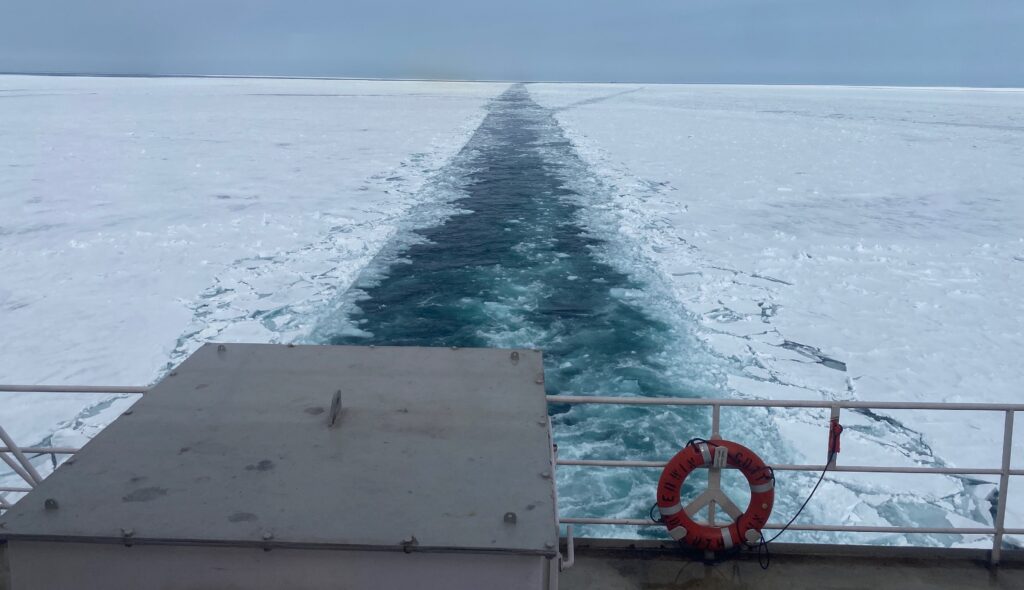
On several occasions during the ice season, federal icebreakers suffered significant engineering problems that left them sidelined during the height of the need. The 140-foot Coast Guard icebreaking tugs, which are over 45 years old, continue to break down on a regular basis.
Things were bad this year for winter shipping, which started in early December, but it could have been much worse. Warmer temperatures on the southern lakes in March melted the significant ice pack on Lake Erie and the Detroit-St. Clair River systems, which allowed the Coast Guard to concentrate its limited operational assets in the north.
“This is a national problem that requires America’s attention,” said Jim Weakley, president of the Lake Carriers’ Association (LCA). Our companies ability to move the building blocks of North American manufacturing which drives our economy and growth extend well beyond the Great Lakes region. The nation needs another U.S. Coast Guard heavy Great Lakes icebreaker.”
– Lake Carriers’ Association
