

(WASHINGTON) — On March 17, 2024, at 2253 local time, the offshore supply vessel (OSV) Jack Edwards was in the Atlantic Ocean transiting inbound to Georgetown, Guyana, when it veered to port and collided with the outbound general cargo vessel Julie C. After the collision, Jack Edwards continued to Georgetown under its own power. Julie C returned briefly to Georgetown before proceeding on its intended voyage.
Two crewmembers on Jack Edwards sustained minor injuries. As a result of the collision, an estimated 2,200 gallons of diesel fuel were released into the water from Jack Edwards. Damage to Jack Edwards and Julie C was estimated at $1.025 million.
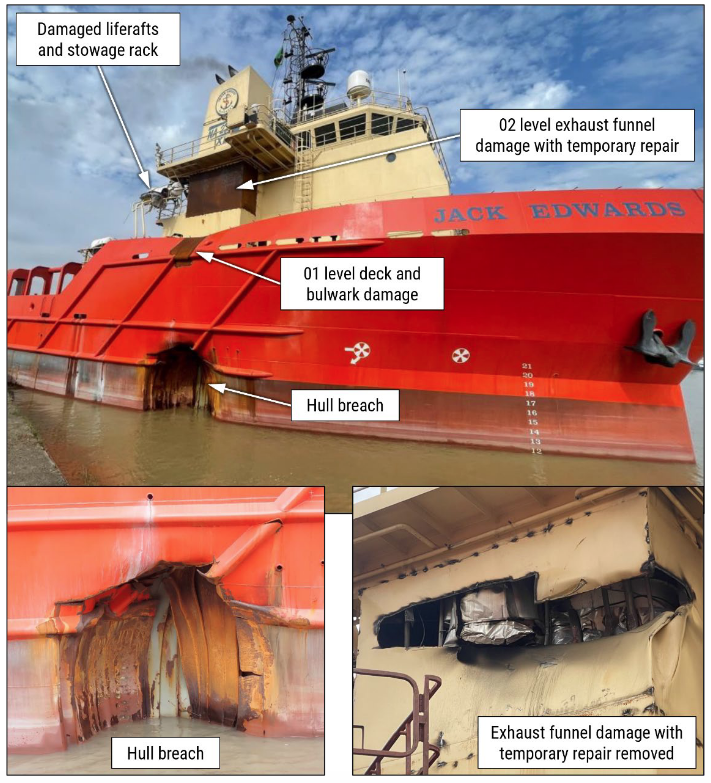
The National Transportation Safety Board (NTSB) determined that the probable cause of the collision was the normalization of degradations to Jack Edwards’ steering system. This reduced the ability to effectively steer the vessel and led to a mistaken transfer of steering and engine controls from the primary navigation station as Jack Edwards prepared to meet the outbound Julie C, resulting in a temporary loss of vessel control.
Reporting issues
Maintenance issues and other conditions affecting the safe operation of a vessel should be promptly reported to senior officers and the operating company. Reporting systems should provide specific guidance regarding critical equipment, hull integrity, and operational safety. A robust reporting system should also include procedures for company oversight to ensure that crews are reporting issues and that the operating company is tracking and promptly addressing them.
Adhering to written procedures
This accident illustrates the potential safety hazards of failing to follow the written procedures for maintenance and operations. Mariners should review manufacturer manuals, the safety management system, and the planned maintenance system on a regular basis to ensure conformance with recommended maintenance and operations plans and procedures. Without proper maintenance, equipment cannot be relied on to perform as designed. Operational procedures are designed provide maximum safety and efficiency for various situations, such as transits through restricted waters. Not following these procedures increases the risk of casualties.
Click here to read the complete report.
– National Transportation Safety Board
