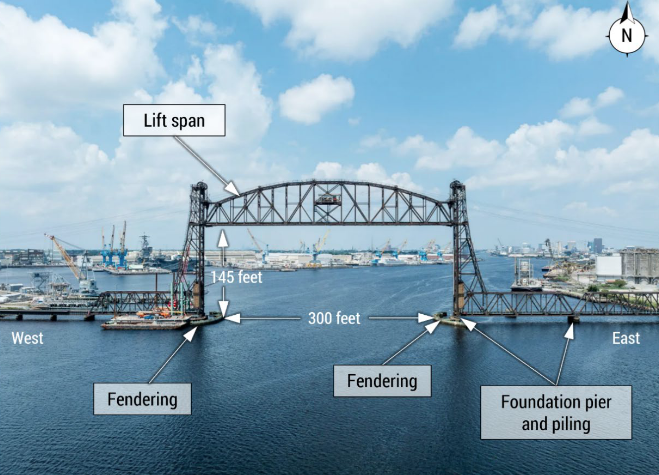

(WASHINGTON) — On June 15, 2024, about 1626 local time, the towing vessel Mackenzie Rose was pushing the loaded deck barge Weeks 281 while transiting the southern branch of the Elizabeth River in Chesapeake, Va., when the barge’s raked bow struck the Norfolk and Portsmouth Belt Line Railroad bridge. There were no injuries and no pollution was reported. The railroad bridge was severely damaged; total damage was $15.8 million.
The National Transportation and Safety Board (NTSB) determined that the probable cause of the incident was a loss of control of the tow by the mate at the helm, possibly due to his error in switching from autopilot to hand steering or impairment by fatigue.
Lessons learned
Navigating in channels and harbors requires quicker reaction times due to traffic, currents encountered, and frequent course changes, and more rudder due to slower speeds. Therefore, autopilot use is often discouraged or prohibited in a harbor entrance or narrow channel. If autopilot must be used, it is critical that vessel operators be fully trained in all features and functions of a vessel’s systems so that they can quickly adjust the modes of the autopilot system or disengage the autopilot to return to hand steering as needed.
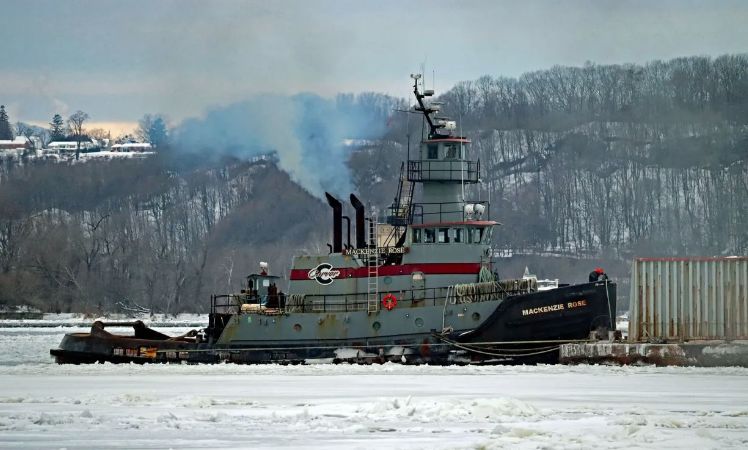
“According to the mate, as the tow transited outbound in the Elizabeth River, he navigated using autopilot by using the rotary knob to increase or decrease the heading setpoint. (There were no company policies that prevented the Mackenzie Rose mate from steering in autopilot while transiting the Elizabeth River),” the NTSB report said. “The mate told investigators that, when the tow got close to the railroad bridge, the autopilot ‘tripped’ without alarming, and he lost steering without realizing it. Based on the vessel’s AIS data and CCTV footage from the Norfolk and Portsmouth Belt Line Railroad bridge, the tow began turning to port at a rate 12 degrees per minute about a minute before the bridge strike. If the mate had been actively monitoring the tow’s approach to the bridge, the tow’s rate of turn should have been an indication that the tow was not aligned to be able to successfully pass through the bridge.”
Click here to read the complete report.
– National Transportation Safety Board