

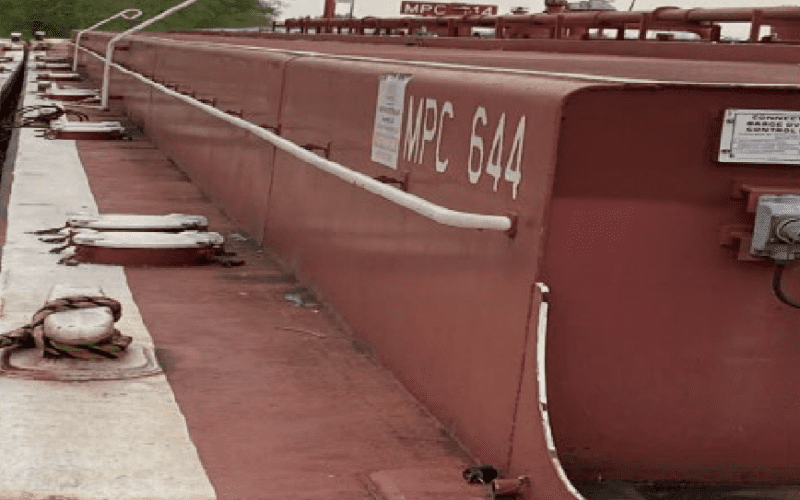
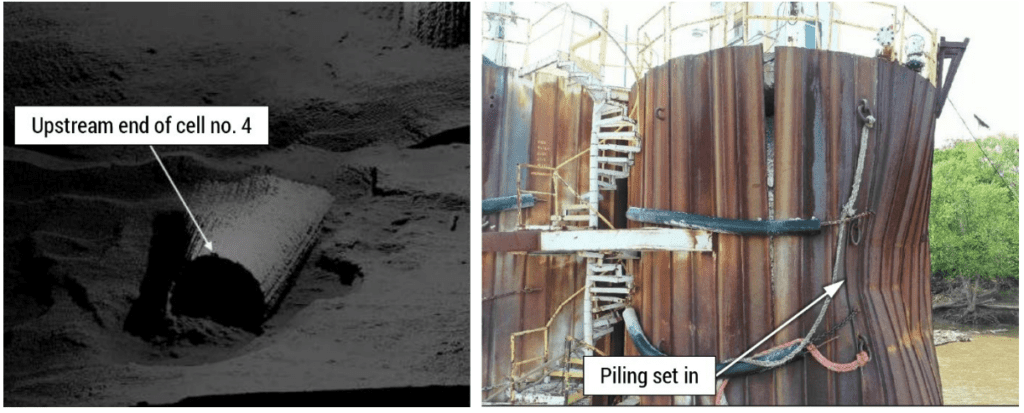
(WASHINGTON) — On April 16, 2024, about 0445 local time, the barges MPC 907 and MPC 644 broke free from their moorings at the Marathon Petroleum Co. (MPC) terminal dock at mile 793.8 on the Ohio River, near Evansville, Ind. The two barges contacted mooring cells about 1,500 feet downstream at the TransMontaigne terminal at mile 794.1.
The barges were later recovered with minor damage. There were no injuries and no pollution was reported. Damage to the TransMontaigne dock structure was estimated to exceed $2.5 million.
The National Transportation Safety Board (NTSB) determined that the probable cause of the breakaway was a failure of their mooring arrangement in high-water conditions due to an undetermined cause, possibly related to debris in the river.
“The breakaway occurred during high-water conditions. MPC expected third-party fleet providers – in this case, EMS (Evansville Marine Services) – to use enhanced measures for mooring in such conditions,” the NTSB said in its report. “Standard mooring consisted of four lines and/or wires per barge. On the evening before the breakaway, EMS personnel had moored the two barges using 10 total lines (three lines and two wires for each barge), thus meeting MPC’s expectations. Because the lines were not retained for examination or testing, investigators could not determine their condition at the time of the accident. However, the lines were inspected weekly, EMS personnel did not report any issues
with the lines when they moored the barges, and additional lines were used to account for the high-water conditions.
“EMS personnel noted drift piles of debris in the river about the time of the breakaway. With high water and increased current, debris, such as tree trunks, tree limbs, and litter, can collect and drift downstream. Accumulating debris at the head of a barge can lead to an increased strain on its moorings, thus elevating the risk of lines or wires parting. Given the swift river current (3 mph) at the time, if debris contacted the moored barges, it could have contributed to the failure of the mooring arrangement and the barges breaking away,” the NTSB said.
Click here to read the complete report.
– National Transportation Safety Board

