

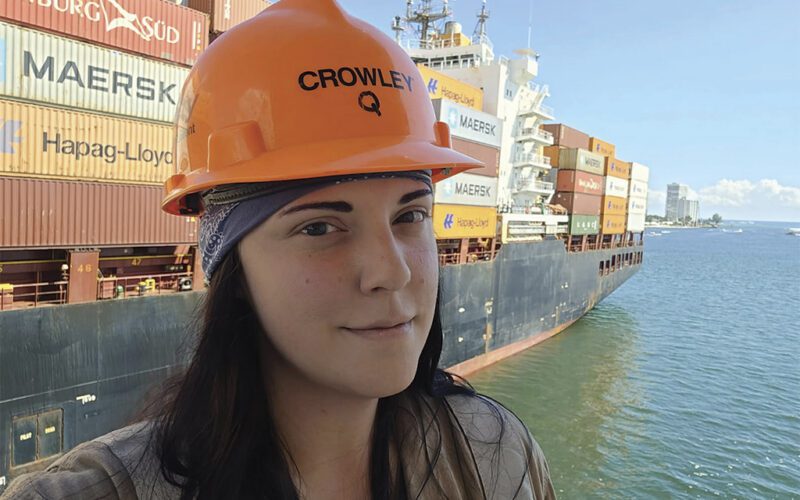

For roughly a decade, maritime training organizations have offered “boot camp”-style programs aimed at fast-tracking new mariners into entry-level jobs aboard commercial vessels. The premise is simple: Compress the essential credentials and foundational skills into an intensive, immersive course that prepares students for life at sea. Over the span of several weeks, participants earn their Transportation Worker Identification Credential (TWIC), obtain a U.S. Merchant Mariner Credential (MMC) and complete Standards of Training, Certification and Watchkeeping (STCW) requirements, alongside basic seamanship and industry-specific career training. The result is a graduate positioned to step aboard as a competitive, job-ready candidate.
The model traces its roots to a fast-track program developed at Mid-Atlantic Maritime Academy (MAMA), where the concept of an all-in, no-nonsense entry point into the maritime industry first took shape. Today, that same approach continues under Maritime Institute (MI), which operates its Boot Camp program at its campuses in Norfolk, Va., Everett, Wash., and San Diego, Calif. (Maritime Institute is the parent company of Professional Mariner.)
The credentials Boot Camp provides, however, are only part of the story. The real measure of the program is found in the experiences of the mariners who passed through it and how it sets the tone for their careers at sea.
“We go out in the community and look for second-chance people, those making a career switch or high school grads,” said Ronald McMiller, the community director for MI’s Boot Camp. McMiller is a former drill instructor and chief warrant officer with a 28-year active-duty career in the U.S. Navy, including more than 20 years at sea aboard numerous U.S. Navy warships.
He said that the first week of Boot Camp is “hardcore” and starts with building soft skills and instilling a sense of “responsibility and determination.” There is a week of team building, conflict resolution and preparation for shipboard life, including swapping terminology so that students say “galley” instead of “kitchen” or “head” instead of bathroom.
“What we try to do is take a little civilian out of them and make them a mariner, or a sea warrior,” McMiller said.
On the day that Professional Mariner spoke with McMiller, a young woman who had attended Boot Camp had just been hired to work on an offshore oil platform — the first female graduate of the program to achieve that milestone.
“I’m so proud,” McMiller said. “She came through after a rough course in life to get where she is.”
Here are a few stories of Boot Camp graduates, in their own words.
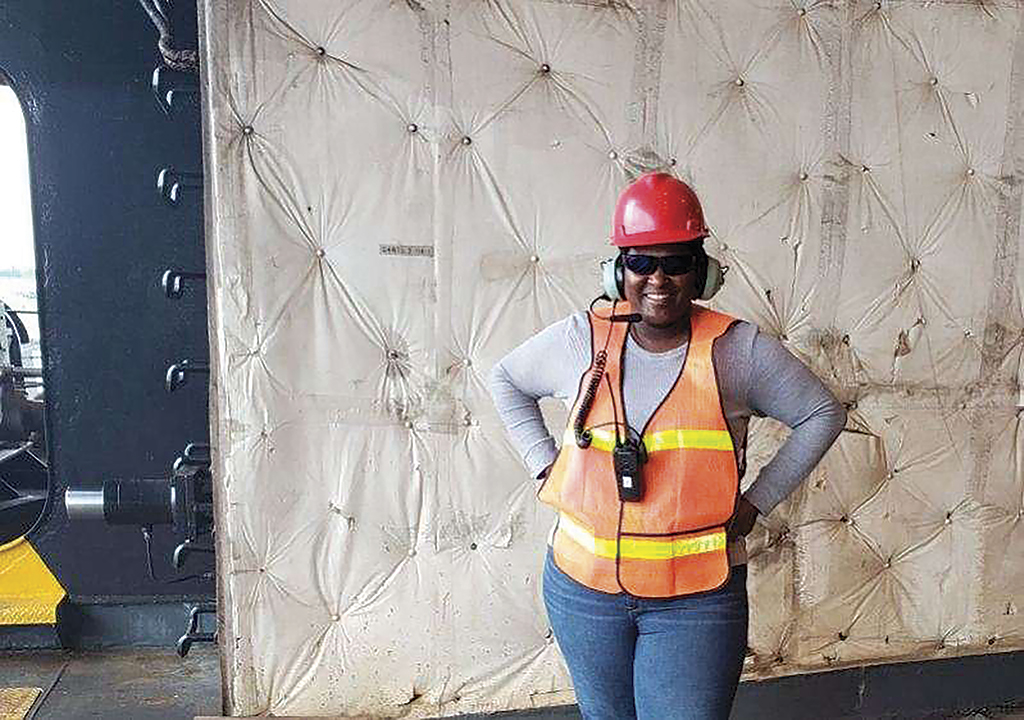
Jameeka Booker
My name is Jameeka Booker, and today I stand here as a proud graduate of the Mariners Boot Camp and a contractor for Maersk International. My journey in the maritime industry began right here in this program back in 2018, when it was still called MAMA. I was part of the largest class they had ever seen at that time. There were 20 of us — it was wild, challenging and unforgettable. But every moment was worth it.
During Boot Camp, instructors from Maersk would come across the street to teach us. They opened our eyes to opportunities many of us never knew existed. That connection led me to SIU (Seafarers International Union), where I began my maritime career. SIU partners with many different companies, which created endless opportunities. I started sailing with them and ended up serving for six years.
Boot Camp truly elevated me to where I am today. It gave me the foundation, the knowledge and the confidence to step into this industry and keep going. And now, I’m working toward earning my mate’s license — an unlimited tonnage license — and continuing the path that started right here in this classroom.
If I could share one message with the next group of Boot Camp students, it would be this: Stick with it. Stay steady. Pay attention to what you’re taught. What you learn here will carry you far beyond this building. If you stay committed, you will make it.
I am living proof of that.
(“Jameeka is one of the program’s highest achievers to date and is currently progressing through the Mate pipeline within the industry,” McMiller said.)
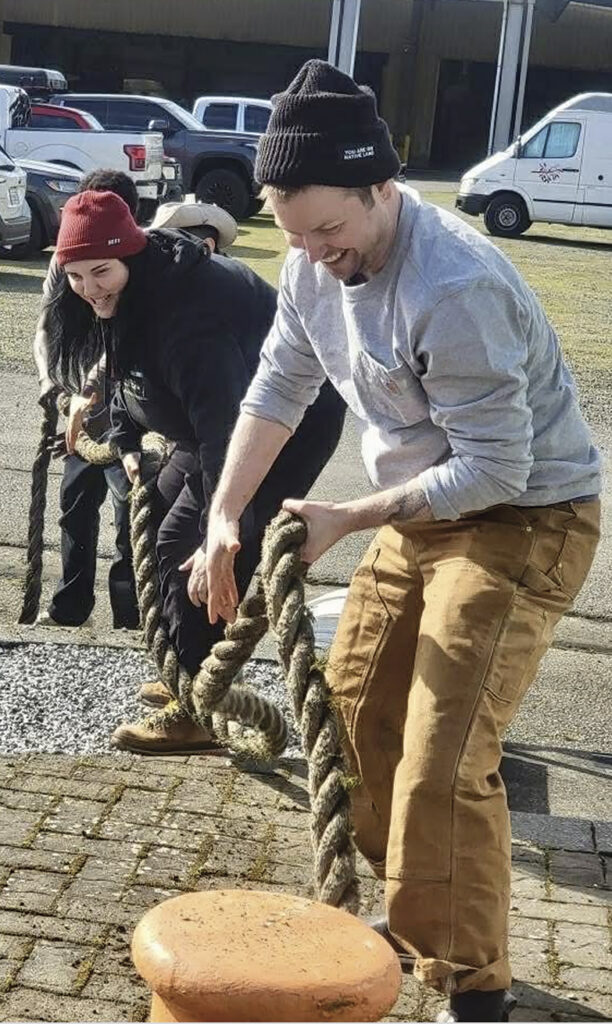
Loren Smoot
I spent years working in the restaurant industry, and while it taught me a lot about hard work, leadership and dealing with anything that gets thrown at you, it was never something I felt deeply connected to. Over time, the long hours and constant pressure wore me down. I started feeling burned out and stuck in a cycle that didn’t leave much room for growth or inspiration.
I knew I needed a real change — something that would push me beyond the routine I’d been living in.
Becoming a merchant mariner was the turning point. Life at sea gave me the sense of possibility I’d been missing. Working with Lindblad Expeditions and National Geographic has made every day feel like an opportunity, traveling to places I’d only ever seen in photos, experiencing new environments and being part of something that feels meaningful. The adventure, the exploration and the constant movement have energized me in a way I didn’t realize I needed until I found it.
Kara Marie Martin
One of my earliest memories is sitting on my bike, staring into the sunset and wondering what lived beyond it. I didn’t see the ocean until I was 22 years old. I was a mountain girl standing on a rocky beach in San Francisco, the Pacific stretching out endlessly in front of me. My maps pointed straight toward Southeast Asia and Japan. I felt an intense pull to cross it.
A few years later, I was a traveling brand ambassador. At a Seattle Mariners game, Ken Griffey Jr. walked by, surrounded by paparazzi. I snapped a casual Polaroid of him. He laughed and asked, “Do you know who I am?”
“No,” I admitted. Then I naively asked, “What’s a mariner?”
He grinned. “A sailor.”
I looked at the ships in Seattle Bay and later that night fell down a Google rabbit hole.
At the time, I was undisciplined, directionless, overweight and couch-hopping. Within months, I was enrolled at Maritime Institute with Mr. Ron McMiller as my instructor. I showed up every morning hungry for this new life. I was tying knots, handling mooring lines, fighting mock fires, learning first aid, CPR, RFPNW navigation and survival at sea. For the first time in my life, I felt like I belonged somewhere. Mr. McMiller will always be one of my biggest inspirations.
On July 30, 2025, the morning of my 29th birthday, I woke up with orders to report to the union hall. Three hours later, I walked out with an assignment in hand and a knot in my stomach. I was going to the Gulf. On a tanker. In August. Peak hurricane season. What the heck had I just signed up for? Excitement and fear twisted together. I could barely eat or sleep. Could I handle the heat? Seasickness? The pressure?
When I looked up the gangway for the first time, disbelief hit me. Golden State towered over the dock. It was massive. It felt like stepping onto a spaceship. The crew’s warm greetings put me at ease. I was assigned as a floater, but the bosun told me I’d be in the engine room. My stomach dropped. I didn’t know anything about the engine room. All I knew was it was brutally hot and loud.
The third mate gave me a safety rundown and PPE. The fire-retardant coveralls I once thought looked “cool” now felt like punishment in the Gulf heat. The door swung open to the engine room, and dread hit me like a punch. The sound was so loud it felt alive — like an animal screaming inside the steel. I shoved in my neon green earplugs and descended into the maze. By the time I reached the Engine Control Room (ECR), I was drenched in sweat. Cold air blasted me as six mariners turned and stared. The first engineer smiled and started briefing me on engine-room life.
My life as a mariner had officially begun.
On my first day, it was the hottest recorded temperature on the water in Tampa Bay. Climbing endless engine-room stairs in a confusing maze, I became heat-exhausted. My vision started to go dark. I felt like I was going to pass out. I didn’t know if I could do it. The chief engineer told me to go to my room for a bit and cool down. I called my maritime mentor, and he said, “Welp, this is the job. Welcome to being a sailor.”
I decided nothing worthwhile was ever easy. I went back into the ECR and said, “I’m gonna tough it out.” I saw a slight shimmer of pride in the chief engineer’s eyes.
That night’s sunset looked like molten lava melting into the Gulf sea. For a moment, the heat, noise and fear disappeared. I watched the sun fall into the ocean I had once only dreamed of crossing.
At first, the engine room felt like being a mouse in a supercomputer, but every day my confidence grew. The chief and first engineer were patient with me. They took me under their wing and taught me the routine of how to be the best wiper (GVA) I could. I learned about the machinery. I learned discipline. I learned what I was truly capable of.
By the end of the second month, I was so comfortable and confident in the engine room that I started considering engine pathways. Of course, then I was assigned to deck. Gotta keep me on my toes. Chipping, painting, mooring the ship. I love both departments and can’t choose, so I’m letting opportunity pick for me.
After three months at sea, I finished my first hitch. I walked down the gangway 70 pounds lighter, wallet heavy, future wide open. I spent my entire off-time touring the U.K. — seeing the world, falling in love with places I had only imagined visiting and realizing just how much opportunity the U.S. Merchant Marine had opened for me.
I am living a lifestyle no other career or country could have possibly given me.
To anyone stepping into this life: You deserve this new chapter. Thank yourself for getting this far. You’re just getting started. Life is a daring adventure or nothing at all. •
