

More than 200 shipping and trade groups are urging the U.S. government to extend its suspension of fees targeting China-built vessels, the latest sign of growing tension over national trade policies that maritime officials warn are fragmenting the international shipping system.
The International Chamber of Shipping and 209 U.S. and international trade associations called on the Office of the U.S. Trade Representative (USTR) on Thursday to extend the suspension of Section 301 fees on China-built vessels, warning that their reinstatement could raise costs and disrupt supply chains. The appeal comes just over two weeks after the Consultative Shipping Group, representing the maritime authorities of 18 major shipping nations, issued a rare public warning that wars, trade restrictions and increasingly divergent national policies are no longer isolated disruptions to global shipping, but signs of a broader structural shift.
The CSG pointed to a series of pressures that have accumulated across global shipping in recent years, including the COVID-19 pandemic, the war in Ukraine, drought restrictions in the Panama Canal and conflict in the Middle East. It also cited discriminatory trade measures and the growth of a shadow fleet operating outside established insurance, safety and transparency frameworks.
Taken together, the group warned, those pressures are creating an increasingly fragmented maritime system in which internationally agreed rules are not applied consistently. The CSG described the result as “a two-tier system, one governed by rules, the other by opacity,” and called for stronger adherence to existing international frameworks rather than another layer of regulation.
The warning was an extraordinary step for an organization that has traditionally operated outside public view. Formed more than 60 years ago, the CSG is an informal forum through which maritime authorities from 18 nations in Europe, Asia and North America coordinate on international shipping policy, open markets and fair competition. The Sept. 8 declaration was widely reported as the group’s first public statement in its more than six decades of existence.
One of those pressures is now playing out in Washington.
In a Sept. 23 letter to USTR, the International Chamber of Shipping and 209 other trade associations urged the administration to extend the one-year suspension of Section 301 vessel fees targeting China’s maritime, logistics and shipbuilding sectors. The fees were suspended beginning Nov. 10, 2025, and are scheduled to resume Nov. 9.
The groups said they support efforts to rebuild U.S. shipbuilding and maritime capacity, but argued that the underlying constraints that led to the suspension — including limited domestic shipyard capacity, workforce shortages and a lack of commercially viable alternatives to Chinese-built vessels — remain largely unchanged.
“Vessel fees alone are not a strategy for rebuilding the U.S. shipbuilding industry,” the groups wrote. They warned that reinstating the fees could alter vessel deployment, increase transportation costs and expose U.S. exporters to retaliatory or reciprocal measures.
The trade dispute is unfolding alongside more immediate threats to commercial shipping.
Vessel traffic through the Strait of Hormuz remains sharply disrupted by the continuing conflict in the Middle East, with attacks on merchant vessels, elevated insurance costs and ships operating without normal AIS transmissions complicating traffic through one of the world’s busiest energy corridors.
The CSG also warned that the expanding shadow fleet — hundreds of vessels operating outside standard insurance, safety and transparency frameworks to circumvent sanctions — is effectively creating parallel systems within global shipping. That divide, the group said, increases risk, undermines environmental and safety standards and makes maritime markets less predictable.
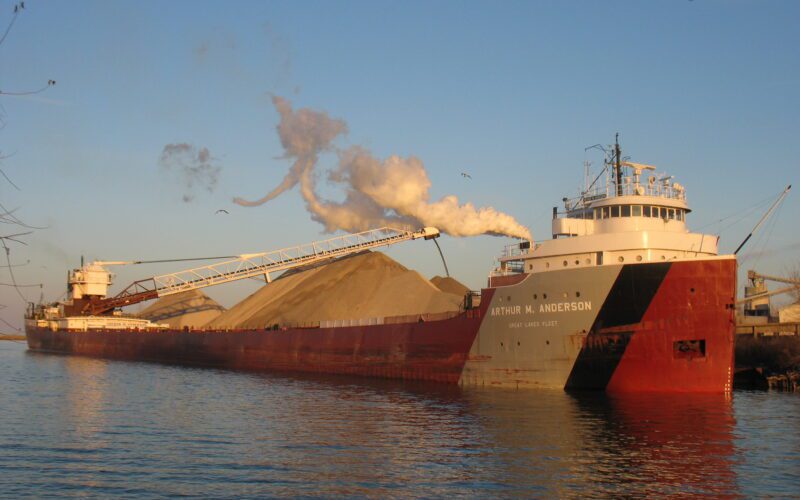
A different version of that uncertainty is playing out in U.S. shipping on the Great Lakes.
Vessel traffic through the Port of Duluth-Superior was down 23 percent through August compared with the same period last year, while Canadian vessel arrivals fell 37 percent, according to Bloomberg reporting published by gCaptain. Port officials said the prolonged U.S.-Canada trade dispute risks pushing Canadian companies toward alternative supply chains.
But U.S.-flag vessel operators offered a different assessment. Jim Weakley, president of the Lake Carriers’ Association, told Bloomberg that the trade dispute “has not impacted binational maritime trade on the Great Lakes,” citing in part the prevalence of long-term contracts. The association instead pointed to longstanding Canadian tax, regulatory and shipbuilding policies that it says disadvantage U.S.-flag operators.
