

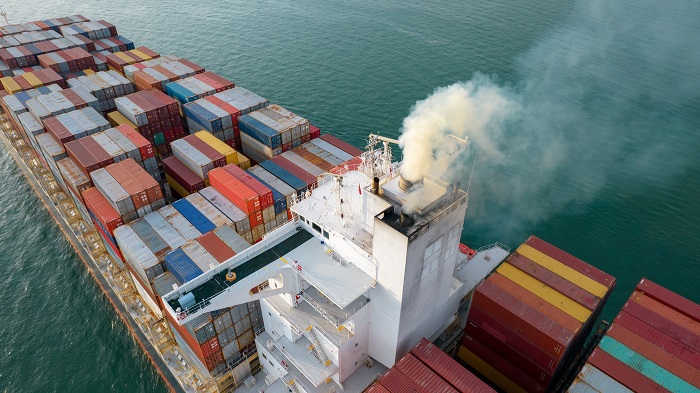
(LONDON) — Shipping and the International Maritime Organization (IMO) are on different trajectories when it comes to achieving net-zero emissions, with no clear pathway for green fuel availability and infrastructure support, American Bureau of Shipping (ABS) Chairman and CEO Christopher Wiernicki said this month at the launch of the 2025 ABS Sustainability Outlook.
“LNG (liquefied natural gas) and biofuels are mission critical to any success and should not be overlooked, overpenalized or discarded in the (IMO) net-zero regulation. Quite frankly, achieving net zero for shipping by 2050 looks like a wild card,” Wiernicki said.
The ABS chairman said the maritime industry needs a framework for emissions, but it needs one that marries ambition with reality.
“The mechanics need to be thought through,” he said. “Right now, we are not where we need to be. Emissions remain 121 percent above the 2008 baseline, compliance costs are compounding, and the signals shaping investment – regulation, fuel pricing, penalties, availability, scalability – are moving at different speeds. The IMO needs to take a timeout. We need to get this right.”
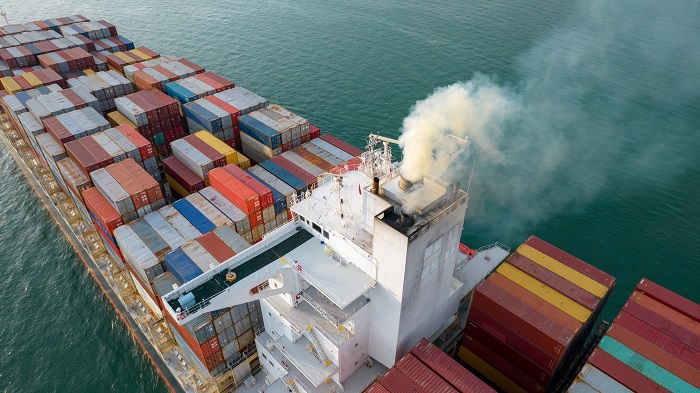
Launched at the ABS Sustainability Summit during London International Shipping Week, the seventh annual report shows that, despite progress on carbon intensity, shipping’s absolute emissions continue to climb.
“Maritime decarbonization is a three-part calculus: 70 percent fuel selection, 15 percent energy efficiency, and 15 percent performance optimization,” Wiernicki said. “That 30 percent beyond fuel is where software plays a pivotal role and, given the current scarcity of green and blue fuel variants globally, is where the most immediate and scalable gains can be achieved. Getting closer to the 2030s, we need to protect the bridge, which is LNG with methane-slip controls and credible bio-/e-LNG pathways, to extend the runway, which is energy-efficiency technologies and onboard carbon capture, to cut well-to-wake emissions and prepare the endgame: nuclear and zero-carbon fuels when they are safe, insurable and investible at scale.”
The report also highlights the sharply increasing cost of compliance, modeling how a typical vessel trading within the European Union could see daily operating costs increase from approximately $15,000 in 2028 to around $45,000 by 2035. Meanwhile, LNG is overpenalized in the early 2030s although it underpins blue fuels, keeps hard-to-abate segments compliant, and buys time for zero-carbon fuels, provided methane slip is addressed and pathways to bio-/e-LNG are opened.
The report, a compilation of ABS research and advanced analysis of progress with respect to sustainability challenges at sea and the readiness of the various solutions, highlights both the important bridging role of energy-efficiency technologies and an impending retrofit capacity crunch at shipyards. The report also acknowledges the game-changing potential of nuclear propulsion technology beyond 2035.
A copy of the 2025 ABS Sustainability Outlook, “Beyond the Horizon: Vision Meets Reality,” is available here.
– American Bureau of Shipping
